

What do you do when the teacher offers a pose that you can’t do? Do you compare yourself negatively to others in class or perhaps on social media?
How do you react to yoga challenges?
When I was a beginner, I remember getting quite angry with the teacher for suggesting a pose that was so obviously impossible. Then when I looked around the room and saw other students doing it, I used to get angry with them for being better at yoga than me! I don’t remember how long that attitude lasted. Hopefully not too long!
I then had a phase where I would jump right in and try anything even if I had no idea what the foundations of the pose were. I guess it was a pendulum swing away from my feelings of frustration. My first headstand, for example, was a complete disaster. I hadn’t built up any of the necessary strength in upper body or core and when I kicked up a bit wildly I toppled straight over and crashed down on top of my teacher’s altar. Not my finest moment, though of course my teacher was very gracious about it…
Sometime after that I moved onto the avoidance technique. I was at this time attending a much larger class and I thought that when something challenging came round I could sneak out for a quick loo break. Of course the teacher always noticed… I also tried the ‘hide in Child’s Pose’ technique for a while, not actually needed to rest, but wanting simply to disappear away from the difficulty of class and the embarrassment I felt at not being ‘good at yoga’. Of course that approach was never going to improve my practice! Quite soon I started to deliberately pause my practice and watch the students around me, particularly the more adept students in the front row, and this helped me begin to understand the poses I was confused by. Because I wasn’t hidden in Child’s Pose (or Ostrich Pose, as it really was for me:) ), my teacher could more easily help me and offer suggestions for how I might get started or find the foundation of the pose.

And I’d like to say “the rest is history”. Except that yoga doesn’t work like that. There is no end to the challenges it presents — sometimes in the form of obviously physically demanding postures, always in the invitation to stay present with whatever experience arises.
Certainly now I have a better understanding of the structure of poses, how to modify or use props to make a pose more accessible, and I am pretty realistic about what my body is capable of. But despite much greater technical knowledge, that doesn’t mean I don’t still get occasional flare-ups of anger, frustration, confusion, fear and so on on. And they aren’t necessarily in physically demanding classes, they can pop up suddenly in a restorative practice too. There’s nothing like stillness and quiet to unleash some of your old emotional gremlins when you least expect it. These days I’m unlikely to react by suddenly popping out to the bathroom! I now know that these emotional reactions arise and then disperse; they only hang around if I listen to them and get caught up in the old narratives. If instead I focus on breathing deeply and slowly into the belly and allowing my body to feel grounded, I can reset my mental patterns and approach my practice with more ease, with a sense of curiosity and good humour even towards the emotional roller-coaster.

Perhaps next time you’re in class, you can notice when the negative voices in your head put in an appearance. You might pause to notice what is going on without giving yourself a hard time. Eventually you might even be able to welcome them with a smile (“that old story again!”). It’s all part of yoga practice. It’s all part of being human.
—————-
Rollercoaster image from asklatisha.com
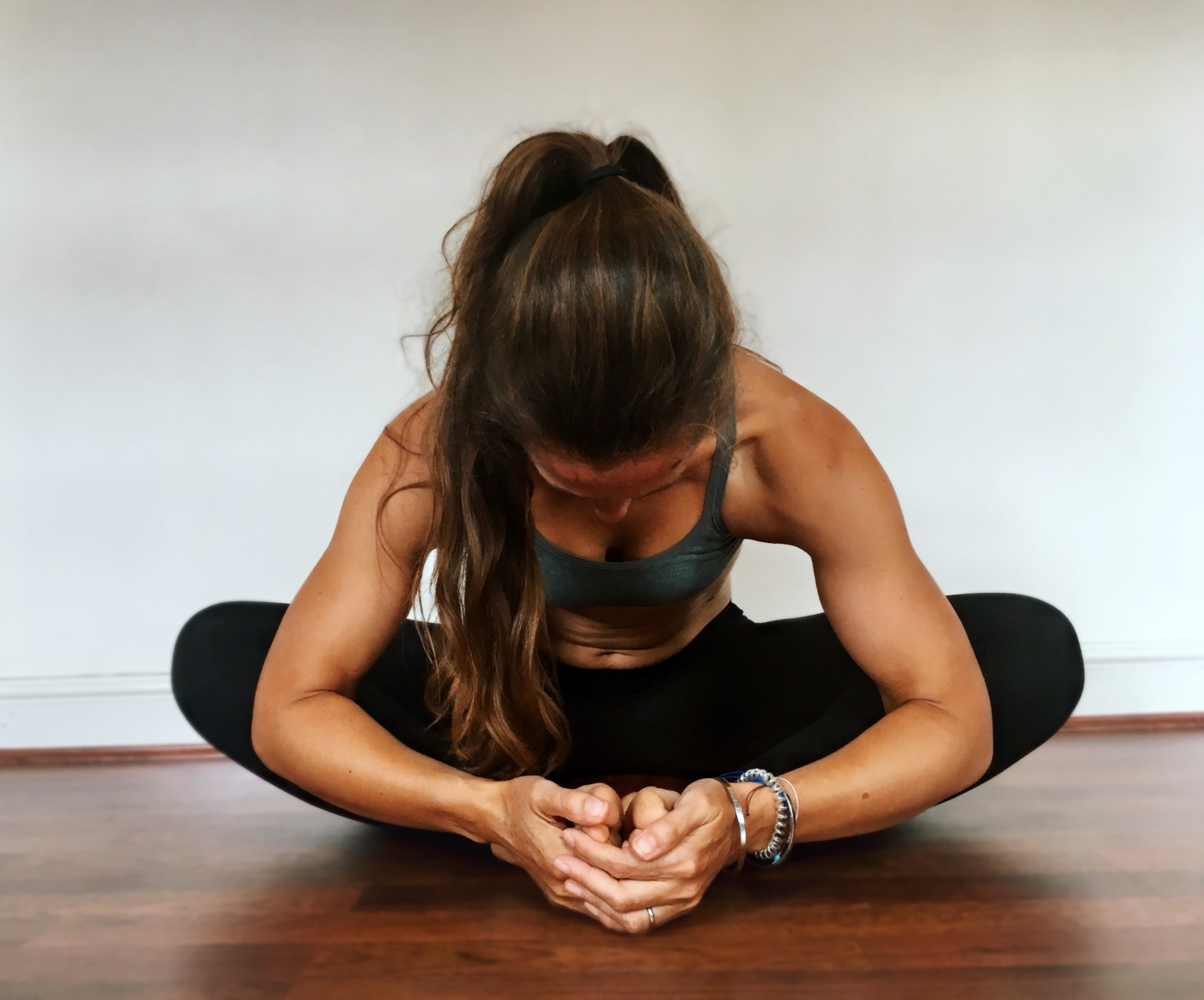

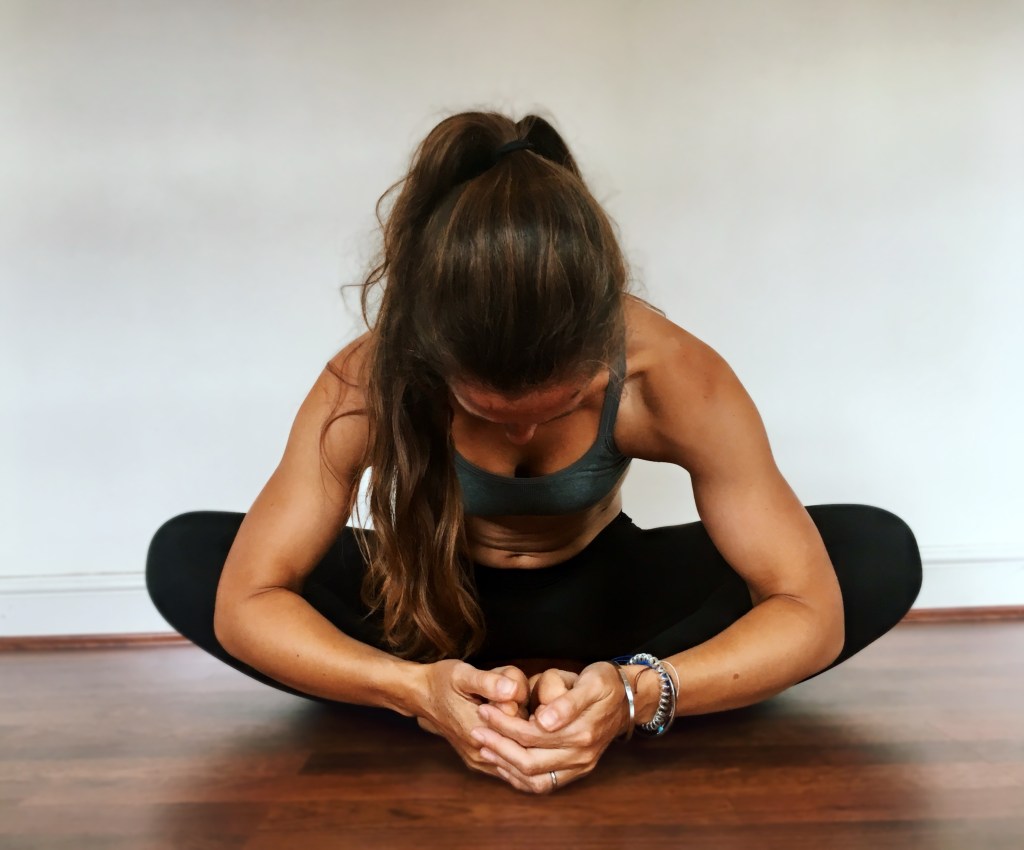


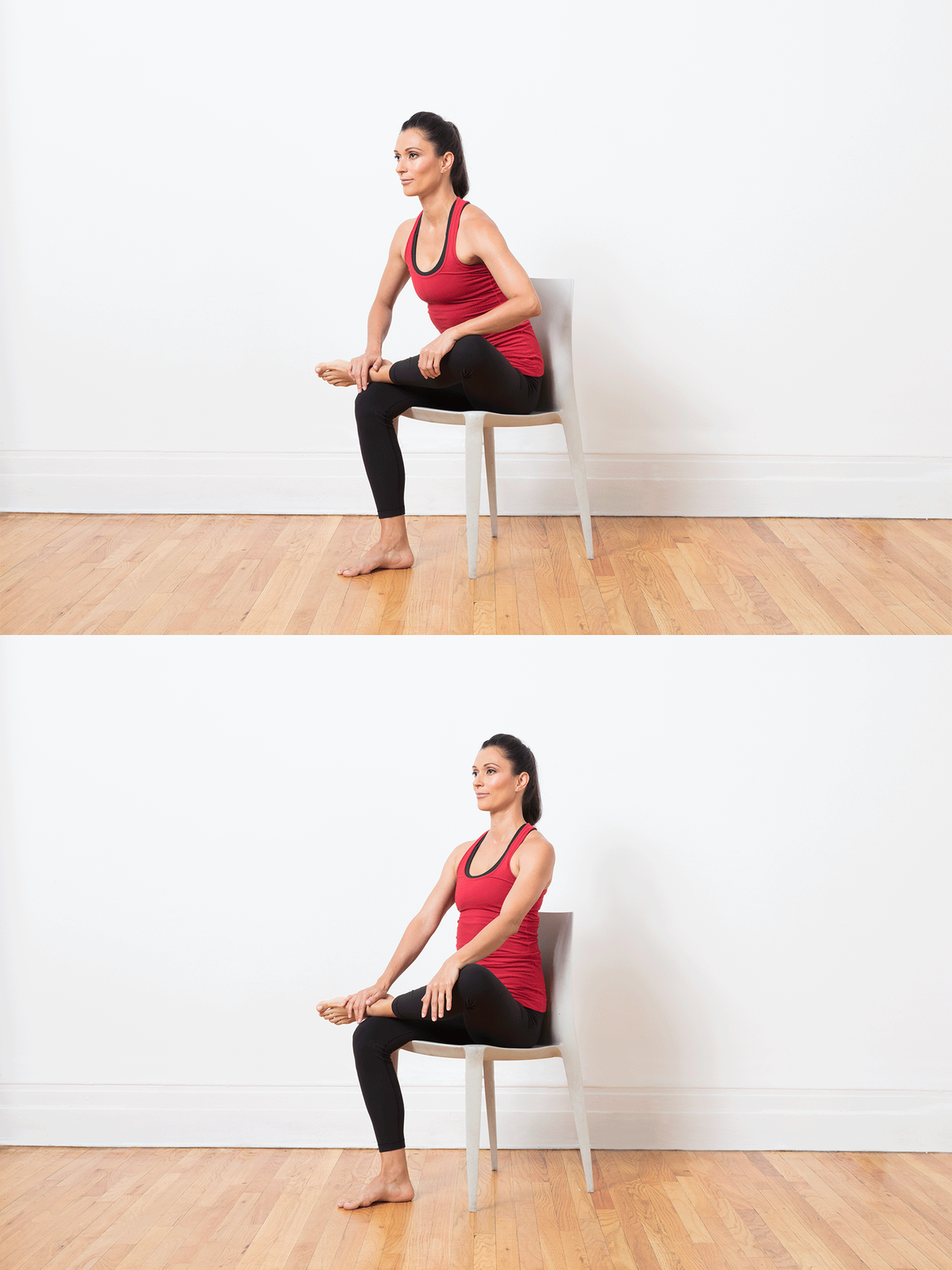
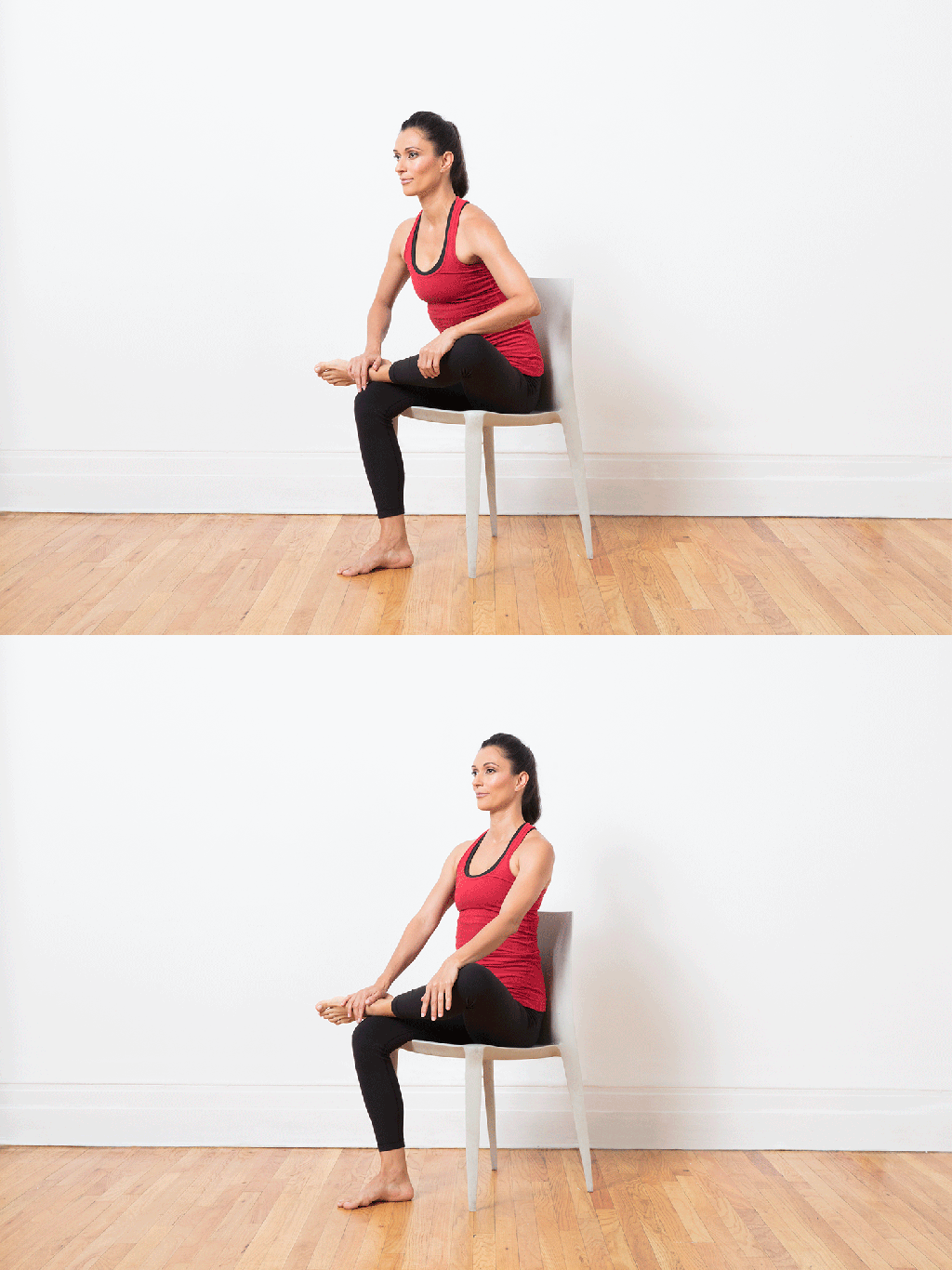


 Not all of us have the luxury of a fancy yoga space at home, but you might be able to set aside a corner where you can roll out your mat. Have your props available, yoga blocks or a bolster for example (or a couple of big books and a pillow). If you can create a calm and quiet environment, you’ll be able to focus better. Ask anyone you share the space with if they can allow you an hour or so to yourself. This is especially important for restorative class. Equally, there’s no need to get flustered if pets, children or spouses make a surprise appearance on camera!
 And here’s the final secret: whatever worries and doubts you have about online yoga class, I’ve probably had them at some point too! As a teacher I have to figure out the best camera angle to show you some pose or movement without forgetting my left and right, I can get stressed about sound quality and internet stability, and I’ve long ago stopped worrying about pointing my rear end at the camera or about you seeing my morning face and hair! Sometimes we need a sense of humour and perspective. Whatever happens, it’s just good to be together and share the experience — my home to your home.
  Victoria Jackson Yoga